The Cairo web market has the same problem as the video market. Equipment is accessible. Skilled operators are everywhere. Directors are rare.
In video, the consequence is footage that was technically clean but goes nowhere because nobody decided what it should say. In websites, the consequence is a site that looks presentable for two weeks after launch, generates no leads, disappears from search results, and gets rebuilt eighteen months later — because nobody could explain why the first one did not work.
I have been on the receiving end of this enough times — from clients who came to Arecs. after a bad experience with their previous agency — to give you a clear picture of what goes wrong and why. The goal is not to criticize the Egyptian web development market wholesale. The goal is to give you a framework for choosing well.
What You Are Actually Buying
When you hire a web development agency, you are not buying a design. You are buying a system. The design is the surface. The system is everything underneath — the code structure, the hosting environment, the content management setup, the SEO configuration, the security framework, the update process. You will interact with the design for two weeks after launch. You will live inside the system for the next three to five years.
Most Cairo clients evaluate agencies on the design. This is understandable — the design is what you can see. But the agencies that serve their clients well over time are the ones whose underlying technical decisions are sound: frameworks that any developer can maintain, hosting that performs under real traffic, code that you own and can take elsewhere if the relationship ends.
Part of understanding what you are buying is understanding website development roles. A credible agency has distinct people — or at minimum distinct disciplines — covering strategy, design, front-end development, infrastructure, and SEO. When one person is doing all five things simultaneously, you are not buying a system. You are buying one person's available hours.
The Five Stages of a Proper Build
A well-run website project follows a clear development roadmap — five distinct stages that, when executed in sequence, prevent the expensive problems that derail most Cairo projects. If an agency skips any of them, you pay for it later — either in costly revisions during the project or in poor results after launch.
- Discovery. Before a single wireframe is drawn, there should be a conversation about what the website needs to do for your business — specifically. Who is the primary audience? What action do you want them to take? What does the competition look like online? What search terms matter? This stage typically takes one to two weeks and produces a document that governs every decision that follows.
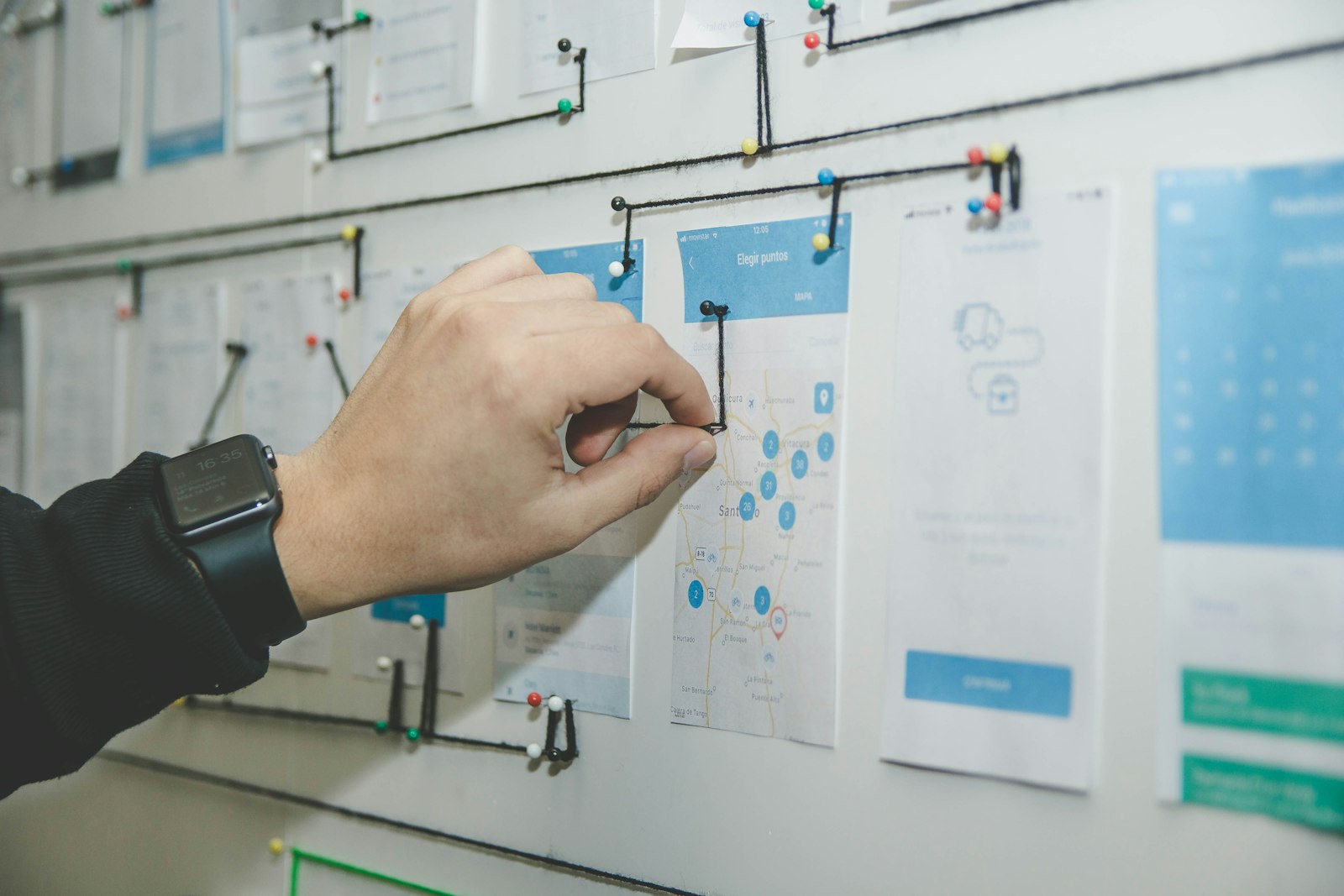
- Wireframing and architecture. Before design, there is structure. A wireframe is a blueprint — it shows the layout of each page, the content hierarchy, the navigation, the user journeys. This is where the information architecture is settled. Skipping this stage and going straight to visual design is the single most common cause of expensive revisions later.
- Visual design. This is the stage most clients focus on, and it matters. But it should be evaluated against the wireframes, not in isolation. A beautiful design that ignores the information hierarchy established in stage two is not a solution — it is a problem wearing good clothes.
- Development and QA. This is where the design becomes a functioning website. On a quality build, this stage includes performance testing, mobile testing across real devices, browser compatibility checks, and a pre-launch SEO audit covering schema markup, page titles, meta descriptions, and Core Web Vitals scores.
- Launch and ongoing support. A website is not a finished product. It is a maintained one. What happens when a plugin needs updating? Who owns the hosting? Who is responsible for backups? These questions should be answered before you pay the final invoice — not after something breaks at 11pm on a Thursday.

Three Things You Must Own
Three things must be in your name and under your control at all times during and after a web project. If any agency makes this difficult, walk away — not later, now.
- Your domain. Registered in your name, with your email address as the administrator contact. Never register a domain through an agency unless you have written confirmation that ownership transfers to you unconditionally. Agencies that hold domains hold leverage.
- Your hosting account. You should be the billing contact. Your files should be on servers you control — or on a managed hosting plan that you own and can migrate away from. Agencies that host "on your behalf" with no clear exit path are building dependency, not a website.
- Your source code. When the project is complete, you should receive the complete source code — not a staging link, not a CMS login, the actual files. If the agency built on a proprietary platform that you cannot access or export, the site is not yours in any meaningful sense.
Red Flags That Cost Cairo Businesses Every Year
I see the same patterns repeatedly. Agencies that quote suspiciously low to win the project and charge extra for everything that was obviously in scope. Agencies that use pre-made templates and present them as custom designs — the visible result looks acceptable, the technical result is a site loaded with unused code, slow to load, and impossible to optimize correctly for search. The client does not know this at launch. They find out eighteen months later when they ask why nobody is finding them on Google.
There is a specific version of this in the Cairo market: WordPress installations with cheap themes, marketed as full custom builds. The page looks like the mockup. Underneath, it is a framework carrying forty thousand lines of code you will never use, vulnerable to security exploits, slowed by plugins that conflict with each other, and structured in a way that makes it nearly impossible to pass Google's Core Web Vitals thresholds. You pay for the appearance of quality and receive none of the substance.
One more tell: agencies that lead with polished website development reels but cannot answer basic technical questions about Core Web Vitals, source code ownership, or post-launch support. A compelling reel tells you about design taste. The questions below tell you about the team you are actually hiring.

The Questions to Ask Before You Sign
Before engaging any agency, put together a brief website development requirements checklist: what the site must do, who the primary user is, what pages are essential, what integrations are needed, and what timeline and budget you are working with. A concise website development RFP — even four to six clear paragraphs — will immediately separate agencies that understand your business from those that price based on assumptions. The questions below are the ones that follow.
- Who will own the source code and design files when the project is complete?
- Are you building custom or using a pre-made theme or template?
- What framework are you building on, and specifically why did you choose it for this project?
- Will I be the account owner for hosting, or will you manage it on my behalf?
- What is your process for pre-launch performance and SEO testing?
- Can I see Core Web Vitals scores from three of your recent projects?
- What does post-launch support cost, what is covered, and what is excluded?
- Can I update my own content without involving you?
A good agency answers these questions directly and specifically. An agency that deflects — that tells you not to worry about the technical details, that assures you everything is handled — is an agency communicating something about how they operate and who is in control of your project.
Why Cheap Websites Are the Most Expensive Ones
The economics of bad web development work like this. You pay a low initial price. The site launches looking acceptable. Over the next year, organic traffic does not grow because the technical SEO was never set up. The site loads slowly on mobile — which is where 65% of Egyptian internet traffic comes from. Editing content requires agency involvement for every small change because nobody set up the CMS properly. You pay for fixes piecemeal. Eventually the site needs to be rebuilt.
The rebuild costs what a good original build would have cost, plus the cost of the first build, plus eighteen months of lost organic growth, plus the revenue you did not generate because the site was not working. The total is significantly higher than if you had asked the right questions at the start.
What we build at Arecs. starts with the brief. What does this site need to do? Who needs to find it and how? What happens on the page that turns a visitor into a client? The design comes after those questions are answered. The code comes after the design is settled. The launch comes after the QA is done. In that sequence, expensive problems do not happen — because they were caught at the stage where they cost almost nothing to fix.
"A website built fast by an agency that did not ask enough questions will cost you twice — once to build it, once to rebuild it."
— Arecs. Studio
More in Web & SEO